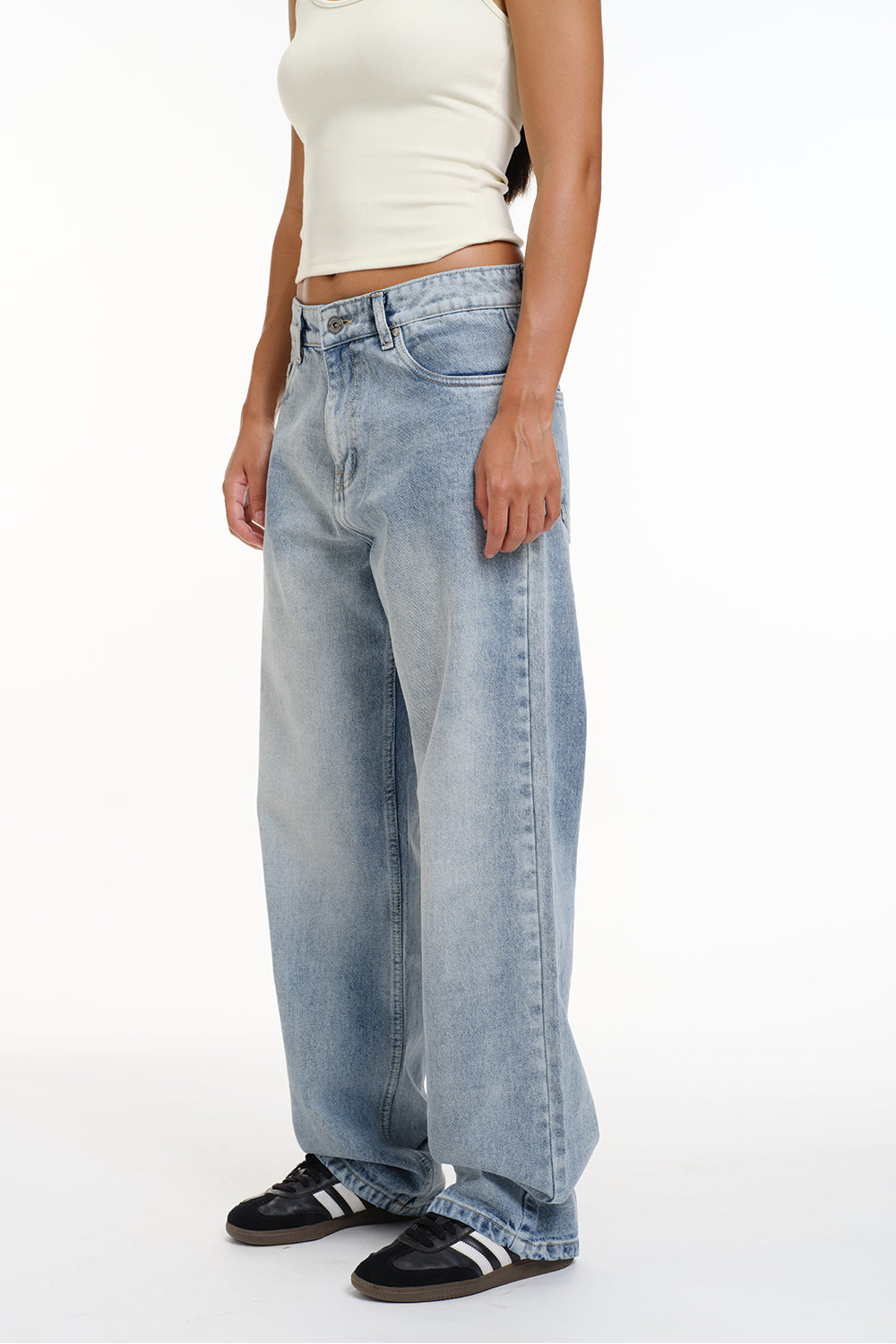
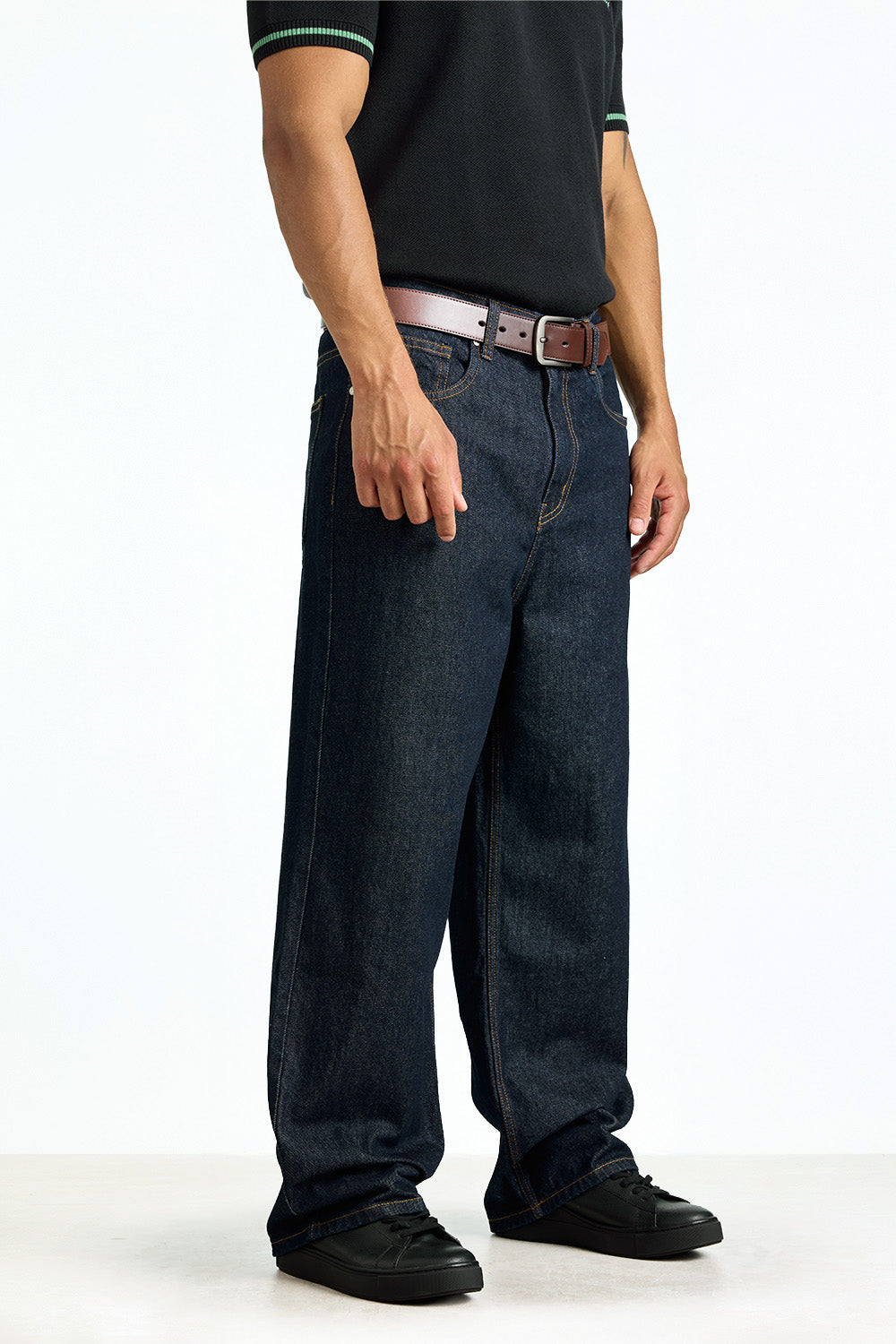
The cotton.
Every Chizelclub pair starts with 12oz long-staple Indian cotton, milled in Ahmedabad, Gujarat. Long-staple fibres weave into a denser, more durable yarn than the short-staple cotton used in fast-fashion denim — which is why our jeans hold their shape through three full wash cycles before any visible relaxation at the seat or knee. We picked 12oz as the weight floor: heavy enough to read as real denim, light enough to wear in 35°C Mumbai humidity without becoming a punishment.
The indigo.
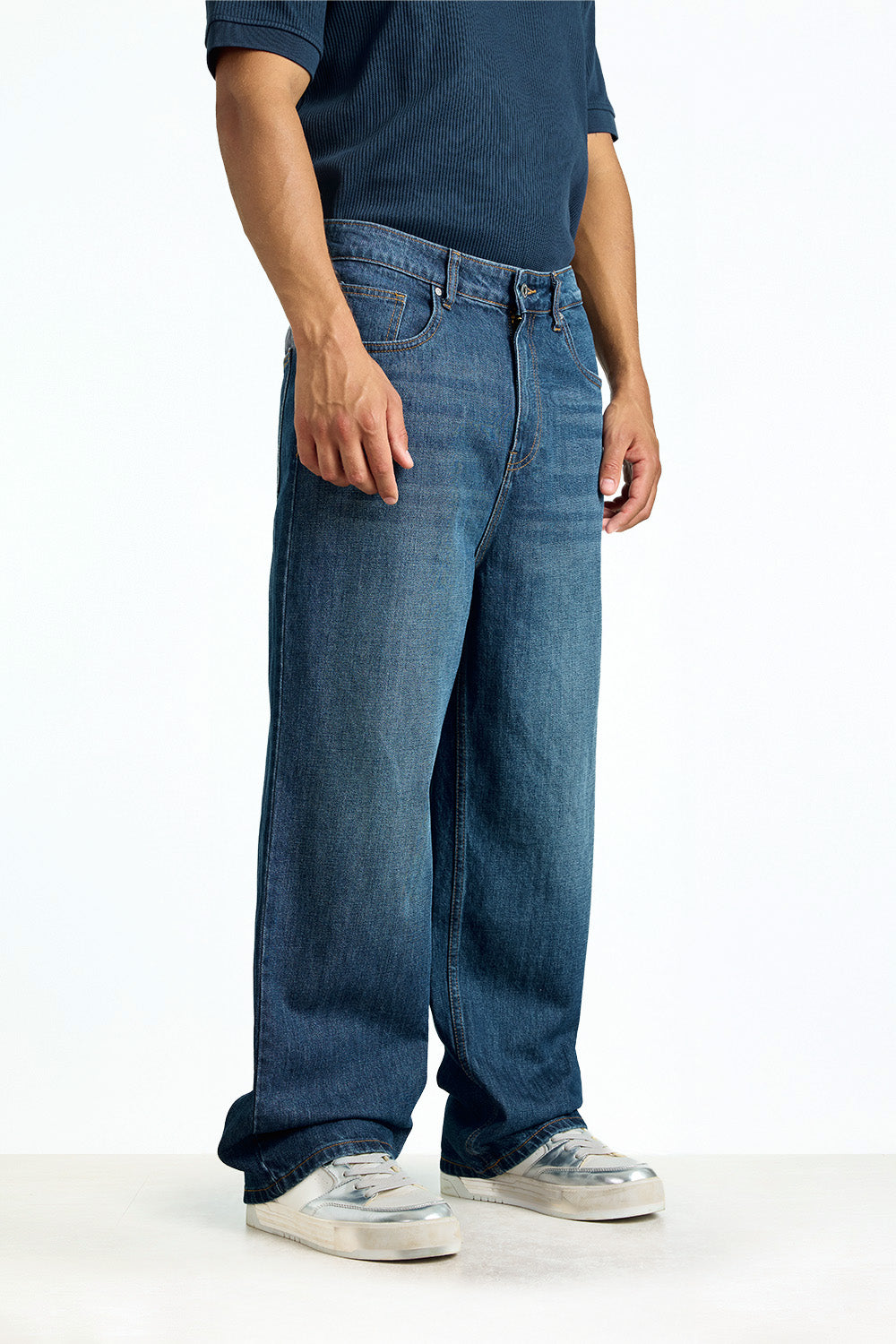
Our base denim is rope-dyed indigo — the traditional process where cotton yarn is dipped repeatedly into vats of natural and synthetic indigo, oxidised between dips, and ring-spun into the warp threads that give denim its blue face and white interior. Each yarn passes through eight dye baths. The result is a wash that deepens for the first six months of wear, then begins to fade in the high-stress zones (seat, knees, pocket edges) the way denim is supposed to — gradually, honestly, and never uniformly.
The dip-dye.
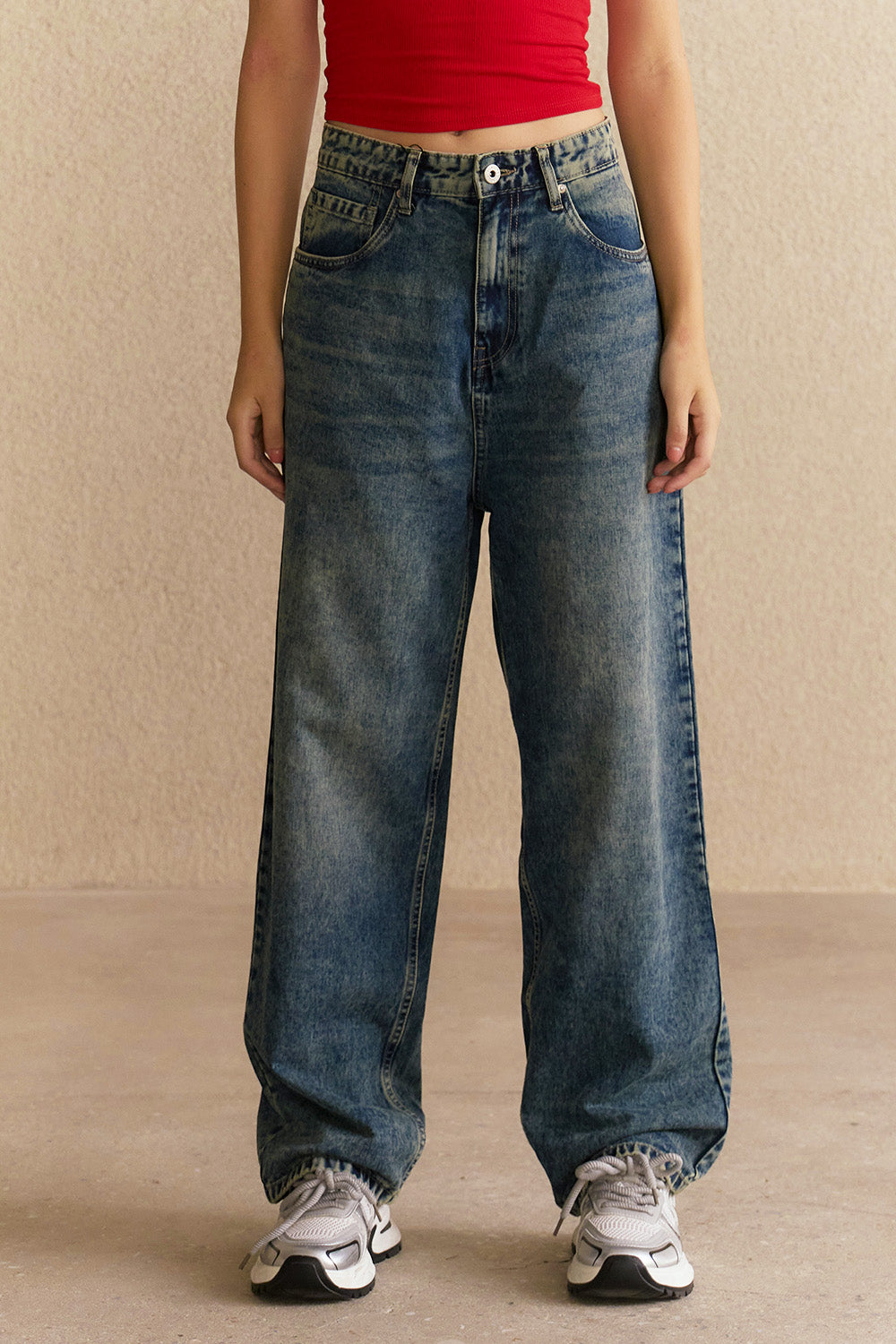
The Dip-Dye Wide is our signature finish. After the jeans are sewn, each pair is suspended upside-down from a rack at the Mumbai atelier and the lower half is dipped into a controlled chlorine bleach bath. The bleach acts on the indigo in a soft gradient — the longer a section stays submerged, the lighter it becomes. The transition zone, where deep indigo meets bleached light, is created by raising the rack inch by inch over a ninety-second window. Because the process is hand-controlled, no two pairs are identical. The fade transition shifts by 2–4 centimetres across the run. This is intentional — we treat fade asymmetry as a feature.
The twill.
Chizelclub denim is woven in a 3×1 right-twill pattern. If you look closely at the fabric face, you'll see diagonal lines running from the lower-left to the upper-right corner of each cell — that's the right-twill weave. This direction matters for two reasons. First, the twill diagonal subtly draws the eye downward along the leg, lengthening the visual line of any wearer. Second, right-twill is the construction Levi's standardised in 1873 — it's the wash that ages into the classic American denim patina that the rest of the industry has since adopted. Our denim is no different on construction; we just spend more time on the fit and the finish.
The cut.
Most denim brands ship one master pattern in graded sizes — Size 28, Size 30, Size 32, and so on, with each step scaling up proportionally. The problem: bodies don't scale proportionally. A Size 30 with hourglass curves has a different waist-to-hip ratio than a Size 30 with an athletic frame, but both receive the same garment. The fix has been "stretch denim" (elastane bypasses the fit problem) and "alterations" (the customer's problem). We do neither.
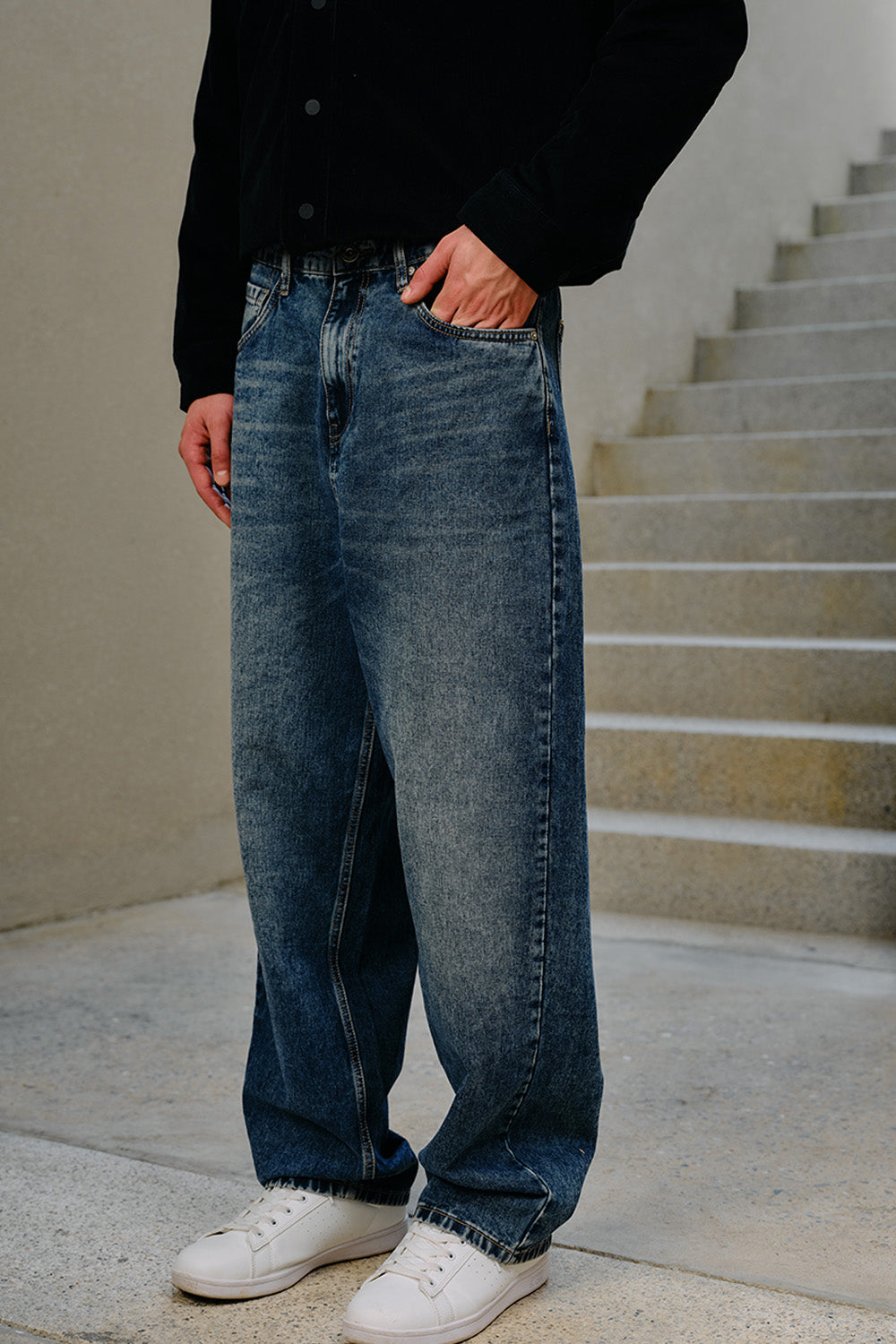
Chizelclub sells named silhouettes — The Wide, The Patch Wide, The Patch Flare, The Front-Seam — each engineered as its own pattern family with rise, hip, thigh, and leg-opening optimised for different body types. The size you pick is the second dimension. Then, if the fit isn't perfect, our atelier re-tailors the garment for free under Fit Liberty.
The atelier.
Every pair is cut, sewn, and finished at the Mumbai atelier. Twelve tailors. Five sewing machines. Two pressers. One leather-patch press. The team is small on purpose — we want every garment to have been touched by hands that know the cut by name. A pair of Dip-Dye Wides moves through the atelier in roughly three weeks: pattern cut (day 1), shell sewing (days 2–4), seam finishing (days 5–7), dip-dye bath (days 8–9), wash + dry (days 10–14), hand-press leather patch (day 15), final QC + hang-tag (days 16–18), pack + dispatch (day 21).
The leather patch.
Our leather patch is vegetable-tanned cowhide from Kolkata, debossed with the chizelclub wordmark in a single press operation, then hand-stitched to the right-hip back waistband with a contrast saddle stitch. Vegetable tanning is the older, slower process — the leather takes 30 days to cure (vs 1 day for chrome-tanned) and ages into a deeper warm brown over the first year of wear, picking up the patina of denim friction at the waistband. The patch is genuinely functional — it's where you hook a thumb when pulling the jeans on — and the wordmark holds up through 50+ washes without fade or peel.
The promise.
The last thing every pair gets — before it ships — is an alteration cheatsheet. Generous seam allowances, clean construction, and a one-page guide that tells any tailor exactly how to adjust the waist, hip, thigh, or length. The same pair is designed to live with you across body changes — gym transformation, weight loss, weight gain, post-pregnancy. Don't have a tailor? We'll match you with a partner atelier in your city. Refinement is part of ownership, not an afterthought.
Why this matters.
Denim has been mass-produced for 150 years. The construction is solved. The fit is not. The brands that win in 2026 will be the ones that take fit seriously enough to engineer cuts for real bodies and then back the fit with a contract — not the brands that ship the cheapest pair the fastest.
Our entire thesis is in that paragraph. Build the cut for real bodies. Hand-finish the wash. Make the leather patch matter. Stand behind the fit forever.
Questions about Chizelclub denim.
The most-asked questions about our denim, our fit system, and our craft process. If you have one we haven't answered, message us on WhatsApp.
What weight is Chizelclub denim?
Our denim is mid-weight 12oz cotton — heavy enough to hold structure through wear and re-tailoring, light enough to be wearable in Indian summers. Selvedge editions run 13oz.
How is the dip-dye fade made?
Each Dip-Dye Wide is hand-finished. The deep-indigo upper half is left in raw form; the lower half is bleached in a tightly-controlled fade bath at the atelier. No two pairs are identical — the transition zone shifts by a few centimetres on every garment.
What does "named-fit silhouette" mean?
Most brands sell sizes. We sell silhouettes — The Wide, The Patch Wide, The Patch Flare, The Front-Seam. Each cut has a story, a fit diagram (rise, hip, thigh, leg opening in centimetres), and a body-type guide. Sizes come after the cut.
Are Chizelclub jeans suitable for plus-size bodies?
Yes. The line runs XS–XXL with no body type as the "default." Each cut is engineered to drape the same way on petite, lean-athletic, curvy-strong, and plus-size frames. Fit Liberty covers free re-tailoring if the standard size doesn't land perfectly.
Where is Chizelclub denim manufactured?
Made in India. Cut, sewn, and atelier-finished in Mumbai. The denim itself is woven in Gujarat (Ahmedabad mills). Leather patches are vegetable-tanned in Kolkata.
How is the denim different from fast fashion?
Three things. (1) 12oz cotton — twice the weight of typical fast-fashion denim. (2) Hand-finished washes (no machine-stoning at scale). (3) Fit Liberty — every garment ships with a free re-tailor, so the same pair lives with you across body changes.
What is the difference between The Wide and The Patch Wide?
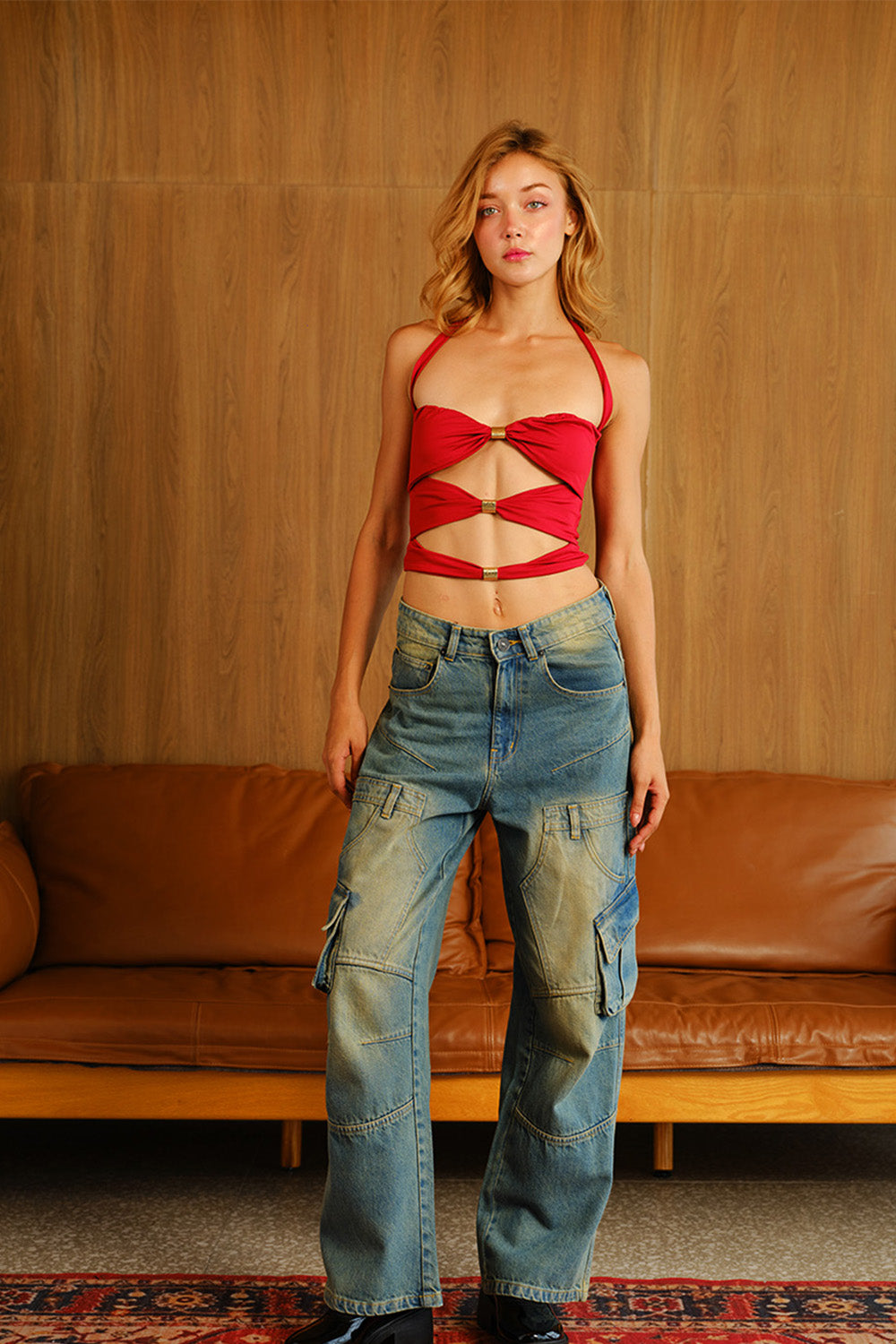
The Wide has a clean front (no patch pockets) — smooth, quiet, minimal. The Patch Wide adds two large rectangular front patch pockets on the thighs — more utility, more visual weight. Same wide-leg silhouette underneath.
How does the Dip-Dye fade behave over time?
It softens gracefully. The bleached lower half develops light whisker fades through wear. The deep-indigo upper half loosens at the seat and waistband. After 6–12 months the wash reads more "lived in" than at purchase — that's the point.
Are Chizelclub jeans stretch denim or rigid?
Rigid. 100% cotton, no elastane. We believe stretch shortcuts the fit problem we're trying to actually solve — which is engineering the cut and offering free re-tailoring through Fit Liberty.
How do I choose between The Patch Flare and The Wide?
The Patch Flare is the bolder cut — deep indigo dark wash, dramatic bell-bottom hem, more presence. The Wide is the everyday silhouette — quieter, more versatile, easier to layer with. If in doubt, take the Find Your Cut quiz; it returns one named fit + one size in 4 questions.